
Stories of Resilience from Mine Workers in East Cameroon
Exposing Child Labor and Hardships in the Artisanal Mines
Young miner washing gold silt in East Cameroon. Photograph: Nasser Otmani, 2025.
This website is very important to me because I grew up near the gold mine location and understand many of the challenges facing the local community. I created it to show the truth about what is happening in the gold mines in eastern Cameroon, especially to children. I visited these mines myself and spoke with workers of all ages. I met children as young as ten who work every day without protection, education, or real hope. Through these photos, videos, and stories, I want to share what I saw and felt. This project is my way of giving the workers a voice and letting others know their everyday struggles.
My goal is to raise awareness and start conversations. These workers don’t get many opportunities to have their stories heard. I believe that when people see the truth, they might want to help. Consider asking questions, conducting research, or supporting policies that protect children. I hope this website is useful to students, teachers, activists, and anyone who cares about justice. Together, we can work to stop this exploitation, expand educational opportunities, and give these mine workers a chance at a better future.
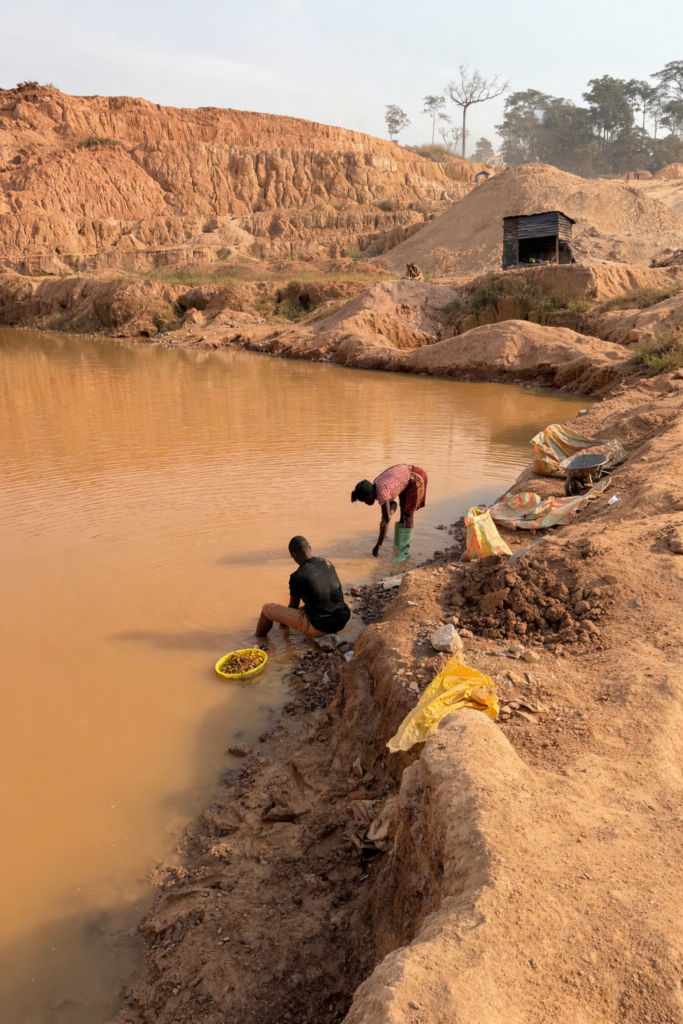
Endless Cycles
From sunrise to sunset, the routine does not change: dig, haul, and wash. These photos show the exhausting cycle of gold washing, where the work is hard, and the pay is usually low.
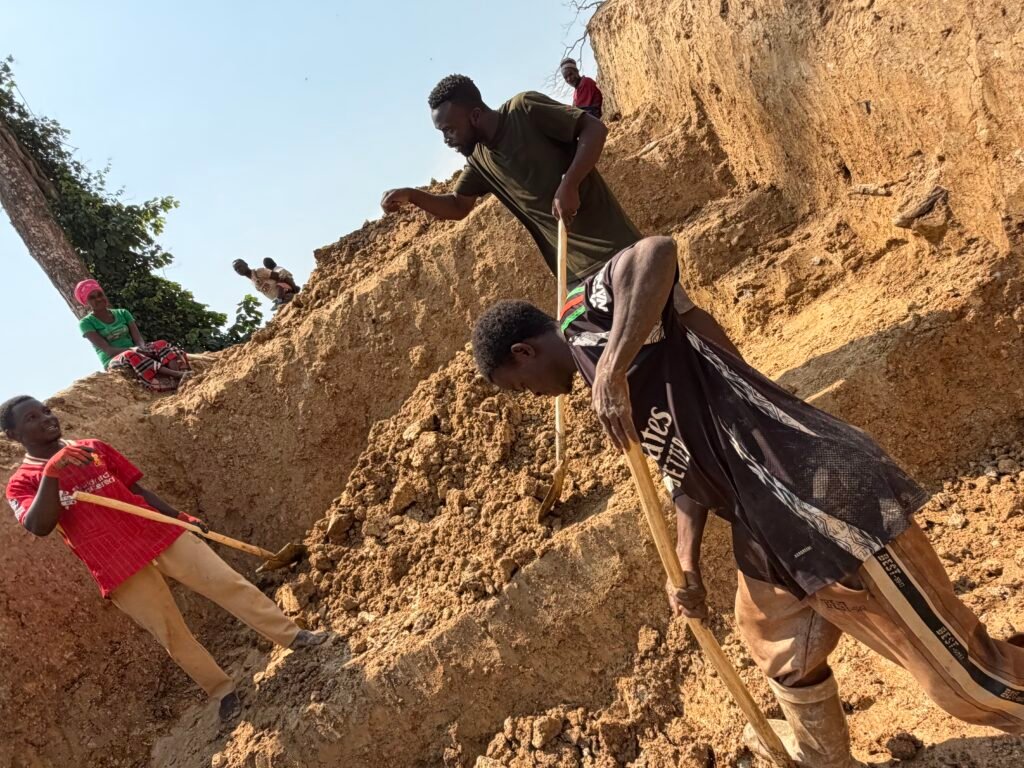
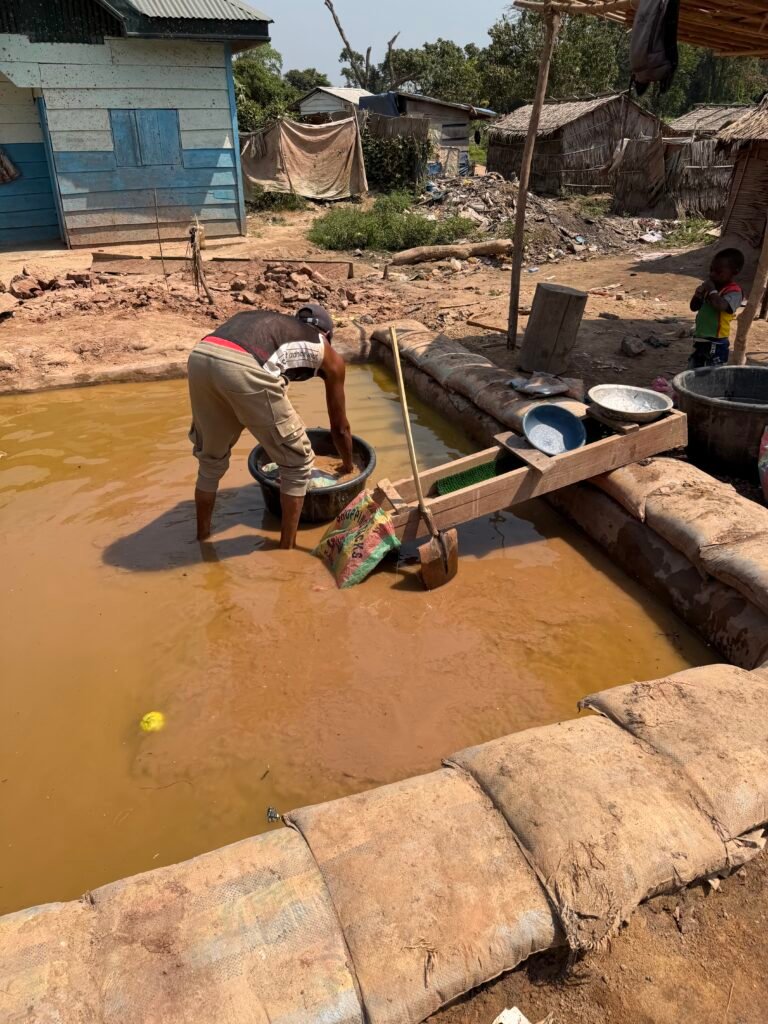
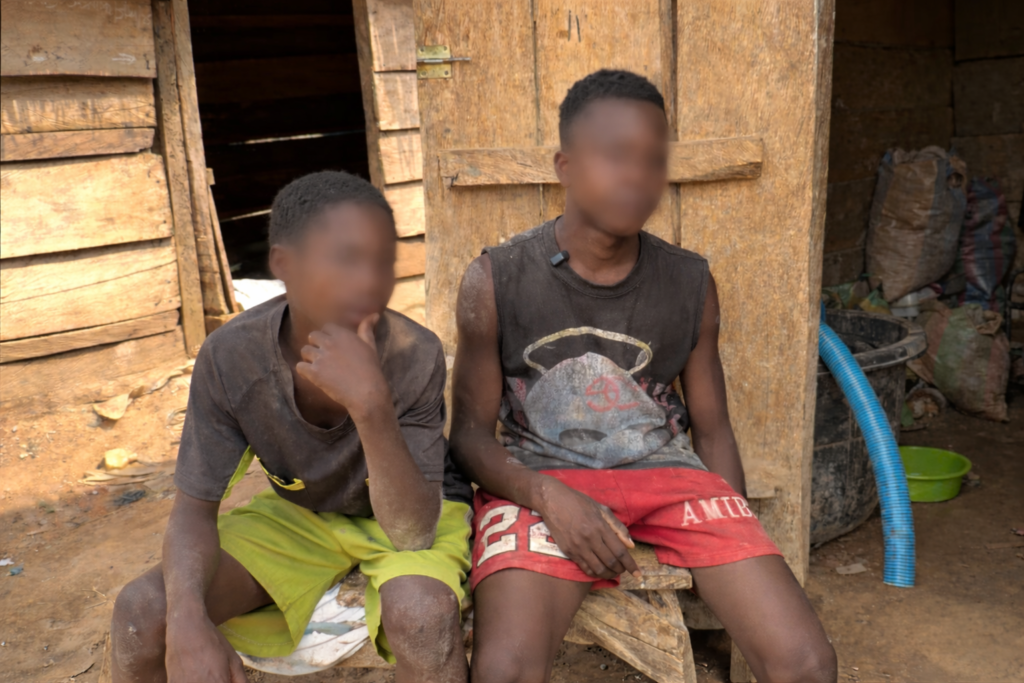
Two young miners are at the site. Photograph: Nasser Otmani, East Cameroon. Photograph: Nasser Otmani, 2025.
“Because my father doesn’t have the money and he died”
This situation highlights what happens when a child loses their main support. In poor families in East Cameroon, if the father dies, the family’s struggle becomes much harder right away. Children often have to work in dangerous gold mines, not because they want to, but because it is the only way to help their families survive. Without a father’s income, they need to find ways to earn money, even if it puts their safety at risk. Losing a provider forces children to take on adult responsibilities too early, which can put their lives in danger.
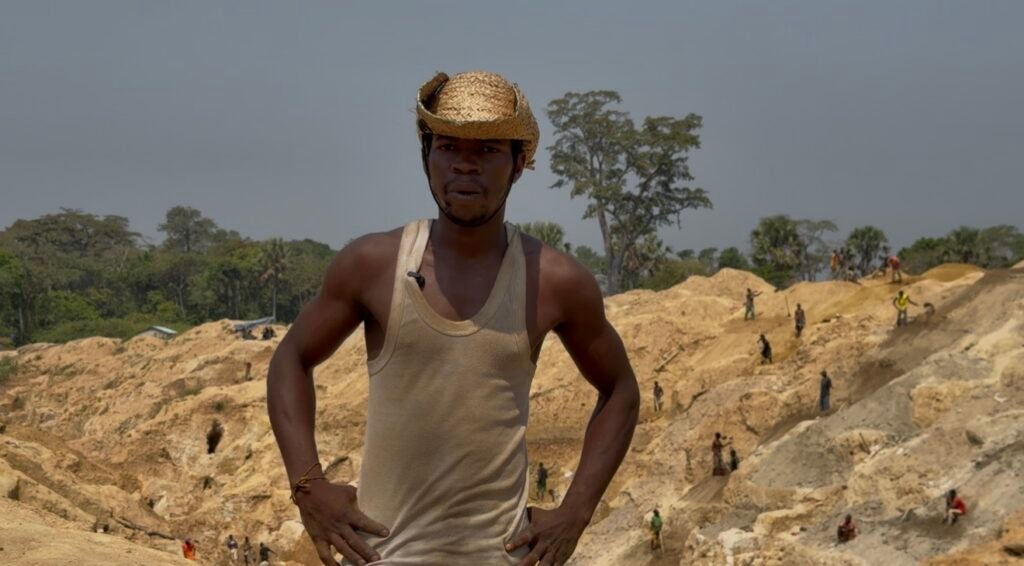
Kaga on the gold mine site in East Cameroon. Photograph: Nasser Otmani, 2025.
“It’s really difficult to see young people coming to work here at the mine, but at the end of the day, it’s the only way for them to make money.”
The phrase “it’s really difficult to see young people coming to work here” expresses sadness and frustration. Young people belong in school, not risking their lives in a mine. This shows how unfair the situation is.
The statement also says, “at the end of the day, it’s the only way for them to make money.” This shows that poverty forces young people into mining, even though they know it is dangerous. It reveals a sad cycle: people do not want to see young people exploited, but many feel they have no choice because mining is often the only way to survive and support their families.
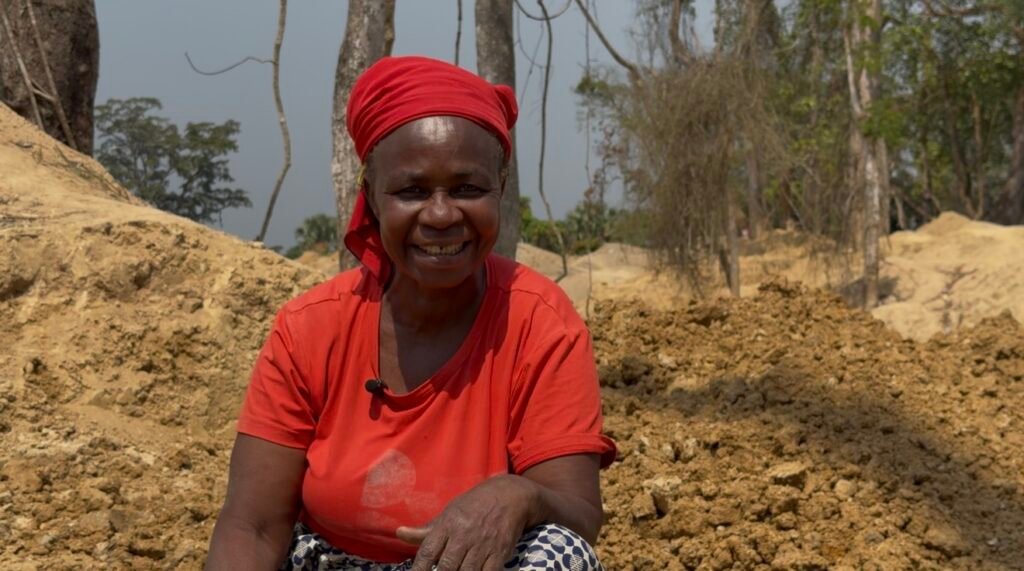
Hawa, sitting on a gold mine, smiles during a break from exhausting work in East Cameroon. Photograph: Nasser Otmani, 2025.
“Sometimes we go back to the village but if the struggle starts again, we have to return to the mine.”
Hawa says the mine is not their first choice for work. Sometimes, they leave and go back to the village, hoping for a better life through farming, help from family, or just some peace. But when “the struggle starts again” with no food, no money, sickness, school fees, and no work, they have no real safety net. So they return to the mine because it is the fastest way to earn money, even though it is dangerous and exhausting. Poverty keeps pushing them back. It is not what they want; it is what they have to do to survive.
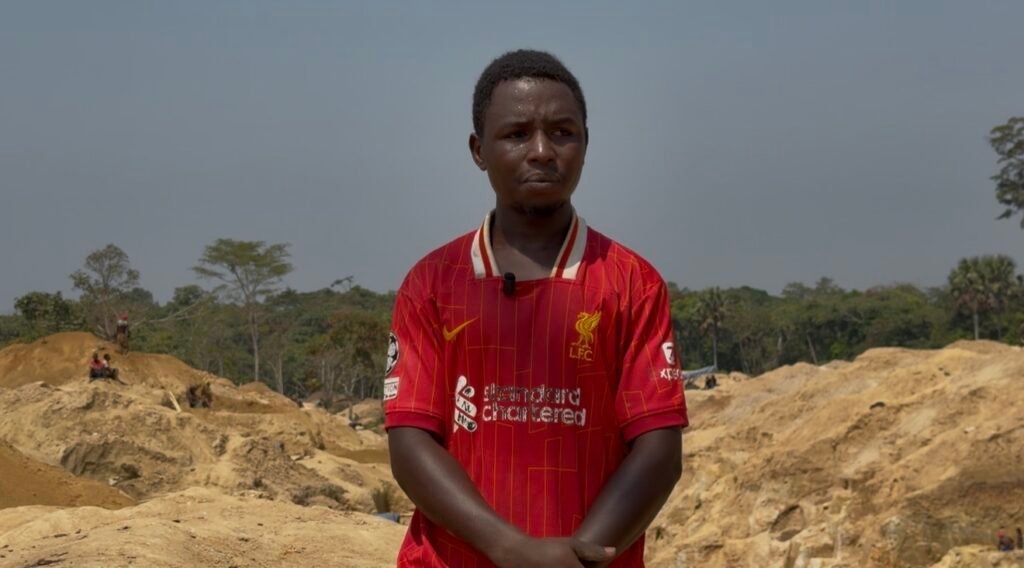
Abdoulraouf stands in front of a gold mine in East Cameroon. Photograph: Nasser Otmani, 2025.
“Because of the circumstances of my life, I came to work here. I’m a refugee. My little sister was sick. There wasn’t a lot of work in the city, so I had to come work here at the mine.”
He worked in the mine because he had to, not because he wanted to. As a refugee with a sick younger sister and no job, he didn’t have many choices. Without a stable place to live, steady work, or money for urgent medical bills, he felt forced to take the risky job in the mine. When he says he “had to,” it shows he truly felt there was no other option. If safer jobs or support had been available, he might have chosen differently. But the mine was the only way he could meet his family’s urgent needs. His story is just one example of a bigger issue. Poverty, illness, and being forced to leave home push many young people into dangerous jobs so they can survive and care for their families. By learning about these situations, we can better understand the challenges others face.
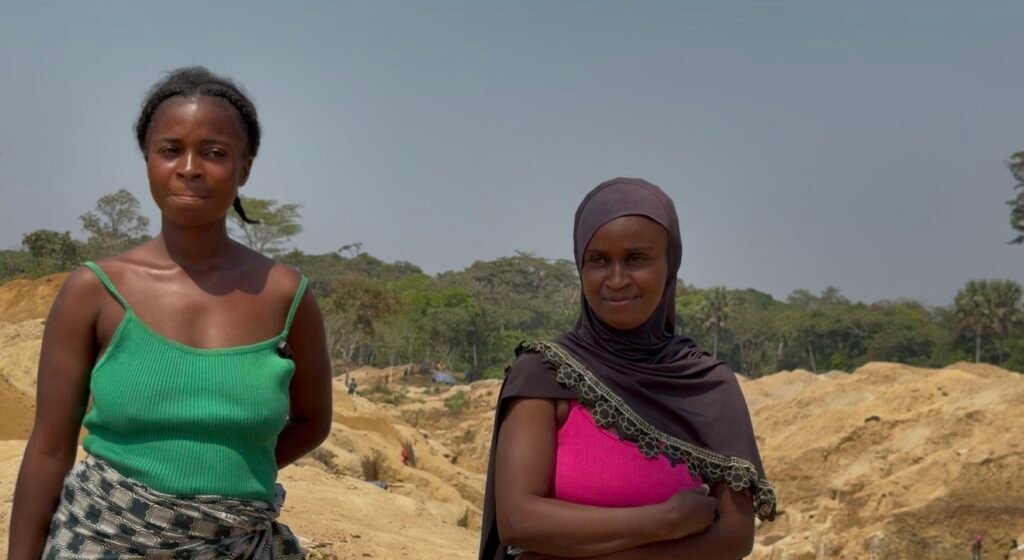
Women preparing food for miners at the site. Photograph: Nasser Otmani, 2025.
“We must not leave them with an empty belly.”
Two women who cook for the miners share their stories. One explains that even when money and food are scarce, she still does her best to make meals. She believes the miners deserve food because they work hard and need energy. She emphasizes that providing meals is about basic human dignity and responsibility. Even in difficult times, it is important to make sure workers have something to eat. Going all day in the mine without food is not only unsafe but also unfair.